Bhutan · December Journey · 10 Days10 Day Journey through Bhutan
From a landing that felt like permission, to a monastery that made me cry without warning — this is Bhutan, unfiltered.
10 min read · Paro → Haa → Thimphu → Punakha → Gangtey → Tiger’s Nest · December
This 10-day Bhutan travel guide takes you through Paro, Haa Valley, Thimphu, Punakha, and Gangtey — not as a checklist, but as a journey through different moods of Bhutan. If you are planning a Bhutan itinerary for 10 days, this route balances culture, nature, and stillness in a way few destinations can. From dramatic landings at Paro to the quiet valleys of Phobjikha, Bhutan isn’t just a destination — it’s an experience that unfolds slowly.
“It didn’t feel like we were landing. It felt like the mountains were deciding whether to let us in.”
— Paro International Airport, 2,200m above sea level
CONTENT TABLE
Highlights
Chapter 1
Paro · Entering the Mountains
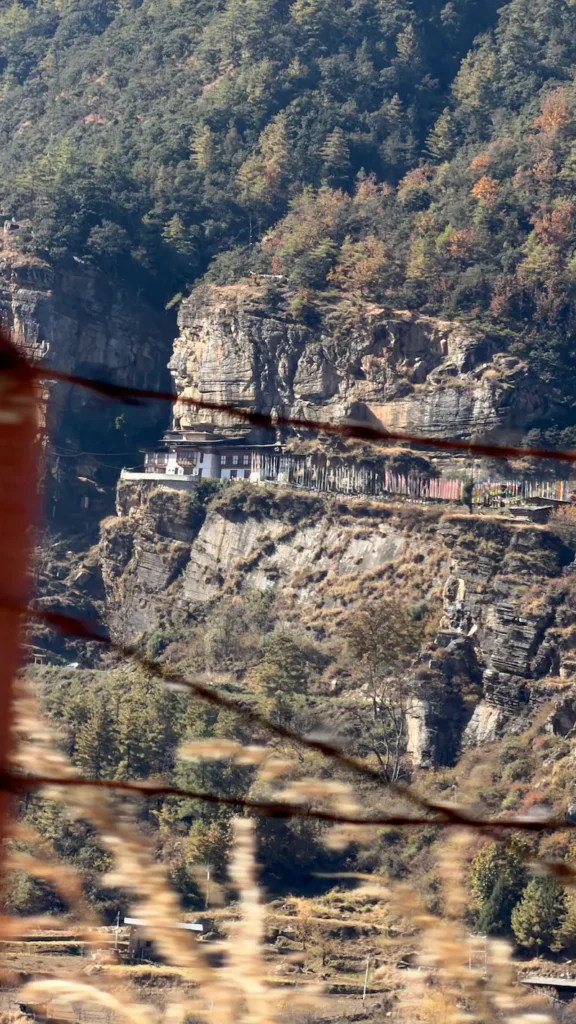
Where the plane flies lower than the houses, and calm arrives before you’ve even collected your bag.
Paro airport is probably the only airport in the world where the approach feels like trespassing. As the plane descended into the valley, we were flying so close to the hillside that I could see houses sitting higher than the aircraft. That’s when it becomes real — only a handful of pilots in the world are certified to land here, and watching the mountains fill the window, you understand exactly why.
And then we touched down, and everything immediately felt calm. No rush, no noise, no carousel chaos. Paro airport is small and almost quietly proud of itself. Even the way people move there is different — like nobody is trying to win a race.
I was taken to Dawa International, a new five-star property sitting slightly away from town. The staff were warm and understated — polite, gentle, efficient, without ever trying too hard. My room overlooked the runway, and the next morning, I watched a plane lift off from my balcony with the valley stretched out behind it. It felt like a small, personal welcome from Bhutan itself.
That evening I explored Paro’s nightlife — which brought me to Café 76, a small pub with karaoke, a genuinely talented local singer, and a room full of people who were simply enjoying themselves. Nobody performing. Just being.
One discovery worth noting: Bhutan doesn’t do small drink measures. You get 60ml or 120ml. No 30ml singles. Straightforward, no fuss. Deeply Bhutanese.
LOCAL INTELLIGENCE
Bhutan serves drinks in 60ml or 120ml only — no half measures here, literally or figuratively. Plan your evening accordingly.
“Nobody was performing. Nobody was trying to look cool. People were just there, enjoying themselves. I hadn’t felt that in a long time.”
The drive from Paro towards Haa Valley is where Bhutan starts revealing itself. Trees line the valleys without interruption, and as the road climbs higher, the cold sharpens and the world simplifies. To reach Haa, you cross Chele La Pass — the highest motorable pass in Bhutan — and at that altitude, even small details begin to matter. The morning dew had turned to ice. Not snow exactly, but everything looked untouched and crystalline.
At the top, the views opened without warning. Mount Jomolhari — often called the Bride of Kanchenjunga — sat in full, unhurried clarity on the horizon. Another peak beyond it, Bhutan’s highest, completed the scene. I forgot its name in the moment and decided it didn’t matter. Some things are better experienced than catalogued.
Yaks sat basking in the thin mountain sun, positioned on the hillside as though they too had chosen the best spot for the view. The cold was sharp, the sun was bright — one of those mountain contradictions that makes you feel entirely alive.
Descending into Haa Valley, my guide pointed out the Indian Army establishment nestled in the valley floor, green rooftops visible from above. The Haa Dzong itself serves as a military administrative base. Bhutan, it turns out, is not just beautiful. It is strategic, layered, and quietly important.
Lunch was at a local restaurant — a simple chicken dish served with what they call Japanese rice, alongside traditional sun-dried pork and beef loaded with chillies. I tried the pork. The locals prize the fatty cuts; I didn’t share that preference. But I tried it, and that felt like the point. I also had butter tea and zow — their fried rice, which locals dip into the tea. Unusual at first. Completely logical once you understand the cold and the altitude.
That night we stayed at Soednam Zingkha, a 160-year-old farmhouse converted into a heritage homestay. Basic, yes. But deeply comforting — hot water, warm bedding, hearty local dinner. The kind of quiet luxury that doesn’t announce itself.
Chapter 2
Haa Valley · The Road Less Travelled
Cross the highest motorable pass in Bhutan, and the country begins to reveal what it keeps from most visitors.
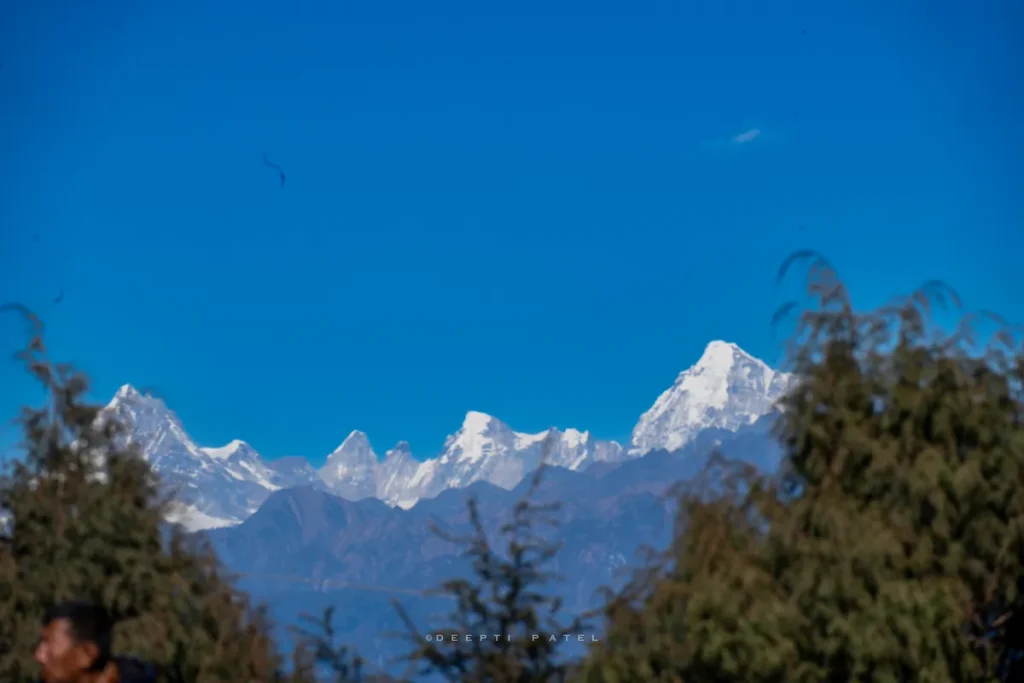
Before you cross Chelela
Pack a proper layer for Chele La Pass even in December sunshine — the wind at the top belongs to a different season.
The pass sits at 3,988m. Altitude effects are real.
“Some places don’t need dramatic description. Chele La just asks you to stand there, shut up, and look.”
Chapter 3
Thimphu · Modern Bhutan, Unmasked
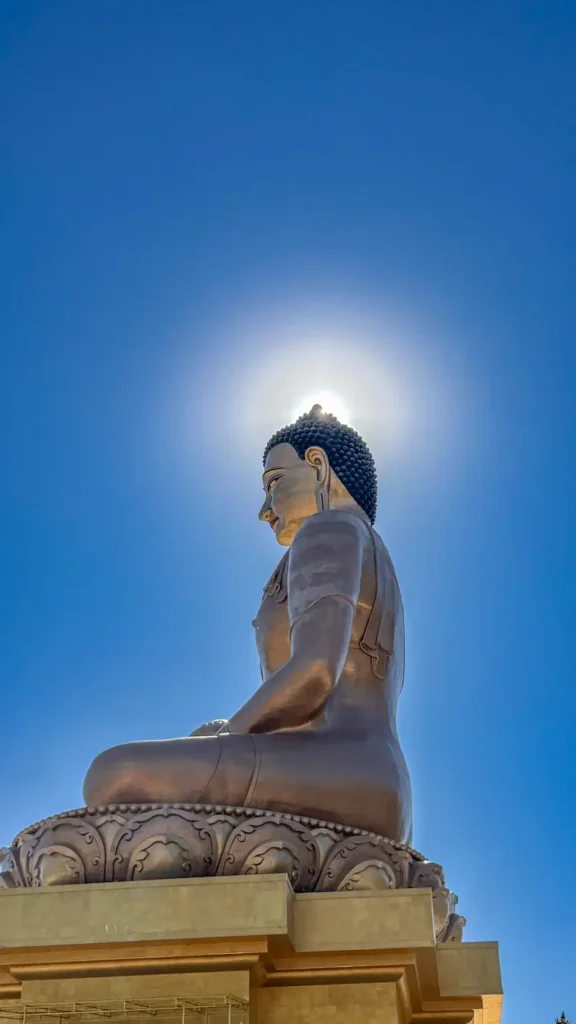
After the silence of Haa, the capital arrives like a plot twist — high-rises, nightclubs, and a national animal born from a divine madman’s joke.
After the silence of Haa, Thimphu felt like a different country. High-rises, shops, cafés, traffic, and actual nightlife. The contrast was immediate and disorienting in the best way — Bhutan changes personality from one valley to the next, and the capital is its most modern face.
We visited the Royal Textile Museum, where I found myself genuinely absorbed. Every weave and pattern carries meaning here — region, occasion, social hierarchy. Textiles aren’t decoration in Bhutan; they are identity, worn as a daily declaration of who you are and where you come from.
Then there was the takin reserve. The takin is Bhutan’s national animal — an odd, gentle creature that looks exactly like what it is: the product of folklore. Legend has it that the Divine Madman, Drukpa Kunley, created it by joining the head of a goat and the body of a cow and bringing it to life through sheer spiritual irreverence. Bhutan doesn’t separate myth from daily life. People recount these stories with the same calm certainty as road conditions and weather.
That evening, Thimphu surprised me further. We went club-hopping, and it was lively, energetic, and completely unapologetic. Not something most people associate with Bhutan — but it exists, and it exists loudly.
Don’t Skip this
Visit the Takin Sanctuary — Bhutan’s strangest resident. Not quite a goat, not quite a cow.
End the day in Thimphu’s surprisingly lively nightlife.
One of the most charged days of the journey began at Dochula Pass for the Druk Wangyal Tsechu. This festival was established by the Queen Mother to honour the Bhutanese Army’s victory over insurgents — and what makes it singular is that the dances are performed not by monks, but by the Royal Bhutanese Army. Soldiers in vibrant traditional costumes and ceremonial masks, moving through ancient choreography against a backdrop of clear sky and snow-capped peaks. For someone who loves photography, it was hours of complete absorption. You could feel the pride, the history, and the gratitude in the air simultaneously.
From Dochula we descended into Punakha, and everything softened. The air was warmer. The valley wider. The pace slower. The Punakha Dzong — sitting precisely at the confluence of the Mo Chhu and Pho Chhu rivers — is one of those places that requires no filter, no editorial framing. It is simply, naturally, majestic.
We stayed two nights in tented riverside suites, with hot water bottles placed into the beds each evening. Punakha has a way of nourishing you that is hard to explain and easy to feel.
One morning we hiked up to Khamsum Yulley Namgyal Chorten before the valley woke up. We had breakfast at the top, looking out over the river plains. Some moments simply do the talking.
Exploring Punakha Dzong revealed its layered history — including three separate staircases historically built for different provincial leaders. Small architectural details that carry centuries of protocol inside them.
Near the suspension bridge we found phuchkas, which tasted unmistakably of Kolkata and felt like an unexpected hug. We also tried Ara — the local homemade spirit, strength-tested by lighting it. If it burns, it’s ready. We tried archery, Bhutan’s national sport. My range was decent. My aim was not. It didn’t matter. One evening ended with a riverside sundowner under a full sky of stars, where we met a Dutch couple who shared their theory on a long, happy marriage. Travel gives you conversations like that when you’re open to them.
Chapter 4
Dochula & Punakha : Festival, River & Fortress
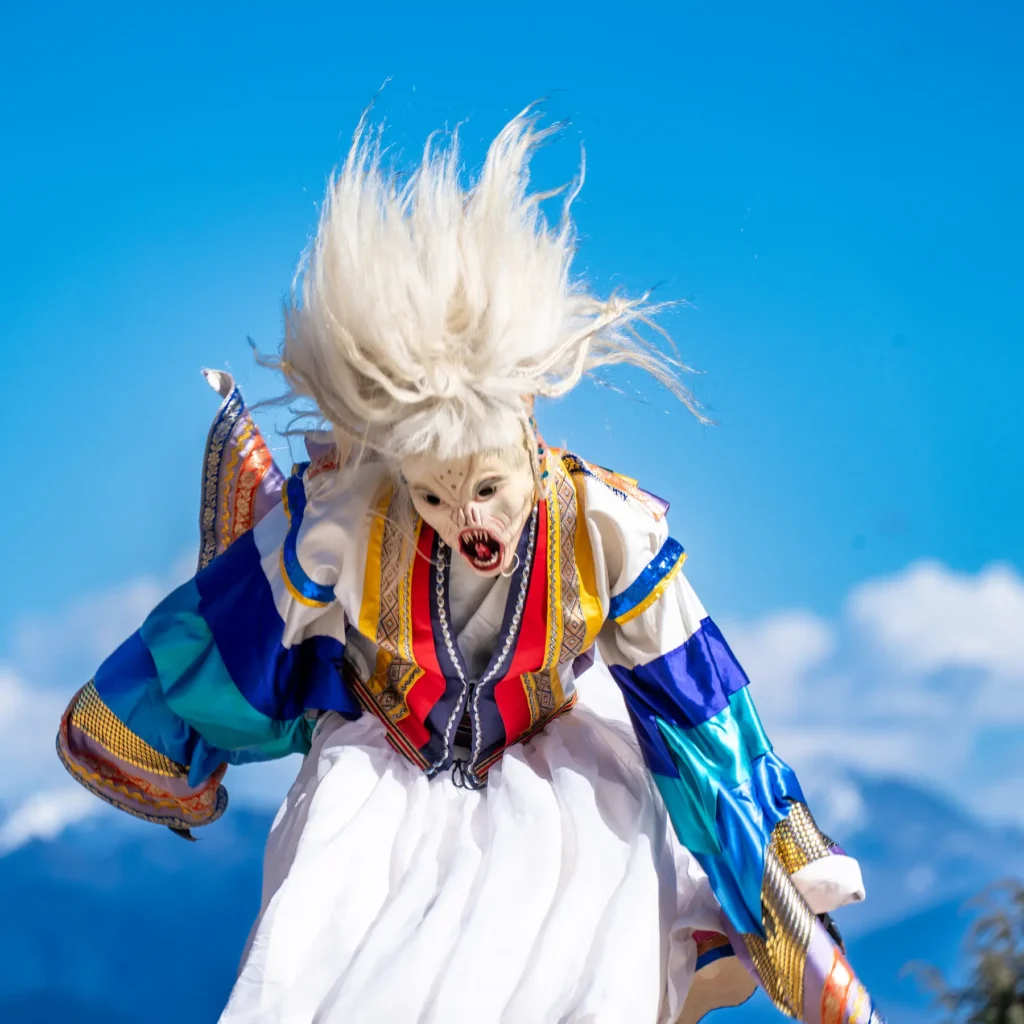
A festival performed by soldiers in masks, a dzong at the meeting of two rivers, and a sundowner that ended with marriage advice from a Dutch couple.
Festival Timing
The Druk Wangyal Tsechu at Dochula Pass falls on the 13th day of the 10th Bhutanese month, usually in mid-December. Book around it. It is unlike any festival you have attended.
“The Punakha Dzong doesn’t need a filter. It doesn’t need a dramatic description. It is just naturally, unhurriedly majestic.”
Chapter 5
Gangtey : Where time softens
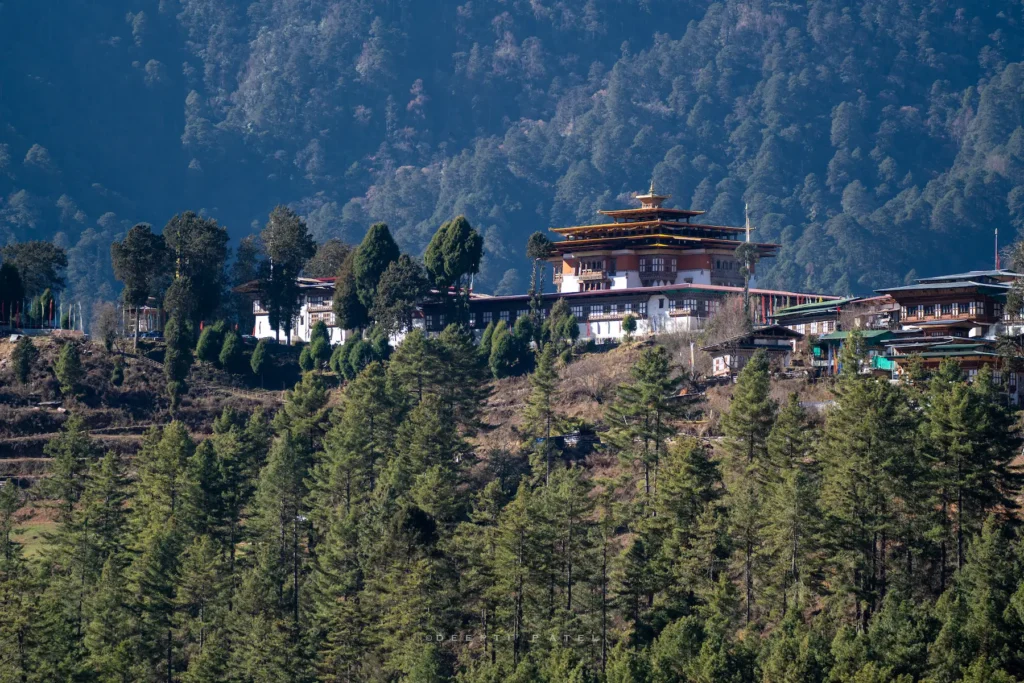
The valley that doesn’t try to impress — and stays with you longest because of it.
BLACK-NECKED CRANE SEASON
The black-necked cranes winter in Gangtey from late October to February.
The Crane Festival in November is intimate and deeply moving.
The valley’s silence is the real experience — allow at least two nights.
Leaving Punakha for Gangtey felt like slowly turning the volume down on the world. The road wound up through Lawa La Pass, and with every turn the landscape opened further — fewer houses, fewer people, wider skies. By the time we descended into the Phobjikha Valley, there was a noticeable quiet. Not the absence of sound. The absence of noise.
Gangtey doesn’t greet you loudly. It doesn’t try to impress. It just is.
The first afternoon, I didn’t do much — and that was entirely the point. I arrived, settled in, and let the place seep into me. The valley stretched endlessly in every direction. The air felt cleaner, slower. Time here operated differently — not suspended, but softened.
We tried archery again. It looks deceptively simple when locals do it. The moment you hold the bow, you understand how much strength and precision it takes. I kept shooting until my thumb was sore and the spot on my hand where the arrow rests started to ache — and then I stopped, just before it became painful. Every shot felt grounding. By the time I set the bow down, my hands were tired but my mind was steady. Gangtey had already begun its work.
The next morning, we visited Gangtey Goempa. As the monks began their chants, the sound filled the space — not loudly, but completely. It wasn’t something you simply heard. It was something you felt. The chants echoed across the valley, bounced off the mountains, and then echoed somewhere inside me. I remember standing there thinking: this sound doesn’t want your attention. It wants your presence.
I didn’t want to leave.
Later, we went into the valley floor to watch the black-necked cranes. These birds are sacred here, and the way locals speak about them tells you everything — they don’t arrive, they return. Watching them glide slowly across the open valley was deeply soothing, their movement perfectly matching the tempo of the place.
We did a nature trail on horseback. No destination that needed to be reached. Just movement, breath, and open sky. Gangtey wasn’t showing me itself. It was asking me to slow down enough to see.
By the time we left, I understood: Gangtey doesn’t give you stories to tell loudly. It gives you silence that stays.
“The monks’ chants didn’t want your attention. They wanted your presence. There is a difference, and Gangtey teaches it.”
Back in Paro for the final stretch, the energy had changed. The excitement of arrival had softened into something more familiar. I stayed at Zhiwa Ling — a grounded, calming property slightly removed from town — and this return felt less about exploration and more about integration.
The next morning was Tiger’s Nest.
The hike to Taktsang Monastery takes four to five hours of steady ascent and descent. There are stretches that test your legs, your breath, your patience. At some point along the climb, you stop thinking in sentences and start thinking in breath. One step, then the next.
But something unexpected happened inside the monastery.
In one of the shrines, without any warning, I started crying. There was no particular thought, no memory attached to it, no reason I could name. Just emotion — sudden and raw. I wasn’t sad. I wasn’t overwhelmed. I was simply open. My guide told me quietly that this happens to some people. That the place affects everyone differently. I didn’t question it or try to explain it. I just let it happen.
That moment stayed with me longer than the physical effort of the hike.
After descending, we visited a local farmhouse — the host, like all Bhutanese elders here, was called Amma. She cooked with dried vegetables and local ingredients. Simple food, but the kind that restores you.
Then came the hot stone bath. Heated river stones placed into herb-infused water, releasing minerals and warmth slowly. I am not prone to hyperbole: the next morning, after all that hiking and altitude and movement, I had no aches whatsoever. My body felt quietly repaired overnight.
We also did Buddhist sand art — carefully placing coloured sand into intricate patterns for hours, and then sweeping it all away and returning the sand to the river. The effort, the beauty, and then the letting go. A simple thing. But it felt like a lesson I hadn’t known I needed — about impermanence, about not gripping too tightly, about how beauty doesn’t need to last to be meaningful.
And that was Bhutan. Not loud. Not dramatic. Just quietly powerful — in the way it made me slow down, notice more, feel more, and leave a little lighter than I arrived.
Chapter 6
Tiger’s Nest : The Climb Within
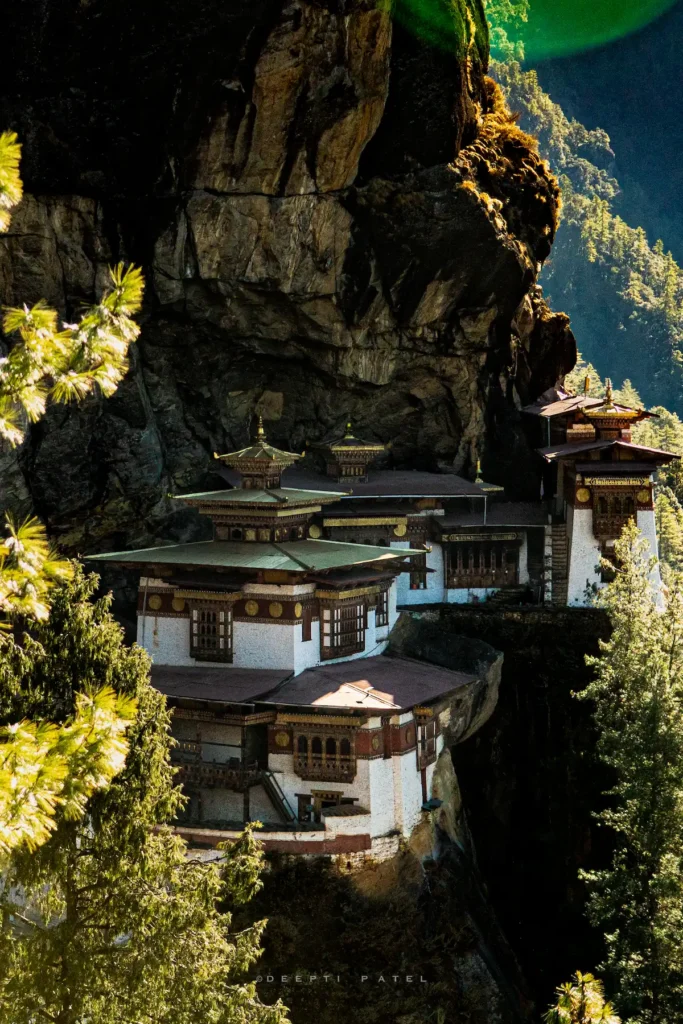
Four hours up. A shrine that made me cry without warning. And a hot stone bath that reset everything.
“Bhutan doesn’t stay in your photographs. It stays in the quieter parts of you.”
Ready to slow down?
Bhutan rewards those who arrive unhurried and leave curious.If this story has stirred something, let’s talk about making it yours.
Start Planning
Travel, The Other WayYour Story Hasn’t Been Written Yet
At The Other Way, we don’t sell itineraries. We design journeys
built around your rhythm — whether you’re a Connoisseur chasing
quiet indulgence, a Firecracker drawn to pulse and play, an Explorer
hungry for raw horizons, or a Triber who travels richest in good company.
From the monasteries of Bhutan to the ice fields of Antarctica,
from Tokyo’s neon nights to the silence of the Serengeti at dawn —
every journey we craft is bespoke, soulful, and built entirely around you.
No templates. No checklists. No compromise.
Just travel, the other way.

Follow us on